
When people hear "escort girls Russian," they often picture a simple transaction: a woman accompanying a man to dinner or a show. But that’s not the whole story. In Russia, escort services aren’t just about companionship-they’re tied to deeper social, economic, and even political realities. Many women enter this line of work not because they want to, but because they have to. The cost of living in cities like Moscow or St. Petersburg has risen faster than wages. A nurse might earn $400 a month. An escort? She could make five times that in a week.
Some turn to these services after losing jobs during economic downturns. Others are single mothers trying to pay for childcare. There are students using extra income to cover tuition. And yes, some do it by choice. But the line between choice and necessity is thin, especially when you’re staring down rent due next week. You don’t need to glamorize it to understand it. The reality is messier than any movie or website suggests. For example, if you’re curious about how these services operate in other parts of Europe, you might come across euro girls escort london, where the dynamics are different but the underlying pressures often feel similar.
It’s Not Just About Sex
One of the biggest myths is that Russian escorts are only about sexual services. That’s not true. Many clients want someone to talk to. Someone who listens. Someone who doesn’t judge them for being lonely, divorced, or isolated. A 62-year-old businessman from Novosibirsk might hire an escort for a weekend trip to Sochi-not for sex, but because he hasn’t had a real conversation in months. He pays for her time, her presence, her ability to laugh at his bad jokes and remember his favorite wine.
These interactions are often emotional labor. The escort has to be attentive, charming, and emotionally available-even if she’s exhausted, homesick, or scared. She’s not just a body. She’s a temporary anchor for someone drowning in silence. And that kind of work takes a toll. Many women report feeling drained after long sessions, even when nothing physical happened.
The Legal Gray Zone
Russia doesn’t have a law that says "prostitution is illegal." But it does have laws against organizing prostitution, soliciting in public, or running brothels. That creates a legal gray zone. Escorts operate in apartments, rented hotel rooms, or through private apps. They’re not working in red-light districts like in Amsterdam. They’re not advertising on street corners. They’re invisible by design.
This invisibility protects them from police raids-but it also leaves them vulnerable. If a client refuses to pay, they can’t call the cops. If they’re assaulted, reporting it could lead to their own arrest under vague charges like "engaging in immoral conduct." There’s no union, no legal recourse, no safety net. One woman in Yekaterinburg told me she kept a recording of every client’s name and phone number. "If something happens," she said, "I need proof I wasn’t just some random girl in a hotel room."
How the Internet Changed Everything
Before smartphones, escorts relied on word-of-mouth or discreet ads in underground magazines. Now, they use Telegram channels, private Instagram accounts, and encrypted apps. Profiles are minimal: a photo, a few lines about interests, rates, and availability. No last names. No addresses. No phone numbers unless the client is vetted.
Some women even run their own websites. They write blogs about books they’ve read, movies they’ve watched, or cities they’ve traveled to. It’s not just marketing-it’s identity. They’re not just services. They’re people with tastes, opinions, and dreams. One escort in Kazan posts weekly reviews of Russian literature. Her clients often ask for recommendations. She says it’s the only part of her job that feels real.
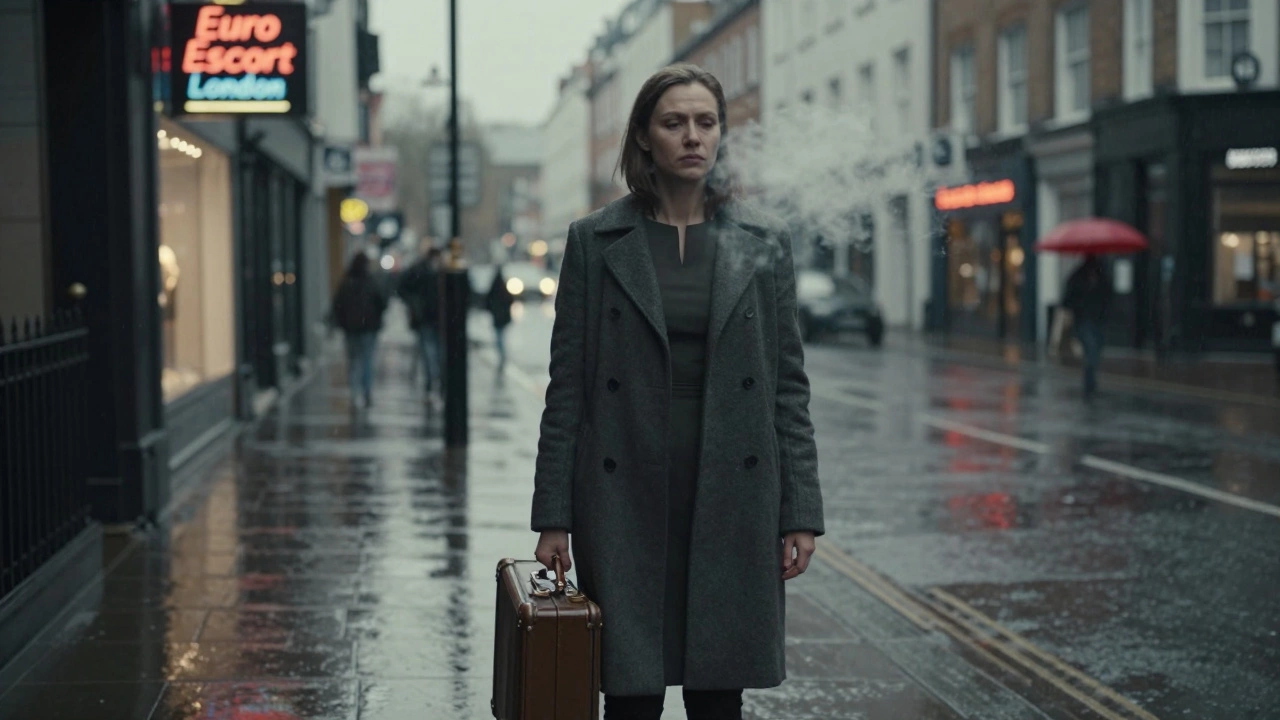
The Euro Connection
It’s no secret that many Russian women travel abroad for work. Cities like London, Berlin, and Prague have seen a rise in Russian-speaking escorts over the last decade. Some come on tourist visas and stay longer. Others are recruited by agencies that promise "luxury companionship"-only to trap them in debt bondage. The pay might be higher, but the isolation is worse. Language barriers, cultural misunderstandings, and fear of deportation make it harder to escape.
That’s where the term euro girl escort london comes in. It’s not just a search term. It’s a label for a real group of women navigating a foreign system, often alone. Some manage to build stable lives. Others disappear into the shadows. The ones who speak English fluently, have university degrees, or know how to navigate bureaucracy tend to fare better. But even then, they’re still seen as commodities by the people who pay for their time.
Why People Keep Coming Back
It’s not just clients who return. Many escorts see repeat customers. Why? Because trust builds. A client who treats her like a person-not a service-becomes someone she looks forward to seeing. She remembers his allergies, his dog’s name, the way he likes his coffee. He remembers her birthday. They exchange gifts. Sometimes, they even become friends.
One woman in Rostov-on-Don told me she had a client who came every two weeks for three years. He never asked for sex. He just wanted to talk about his daughter’s college applications. When she got sick, he brought her soup. When her mother passed away, he sent flowers. She still keeps the card. "He didn’t save me," she said. "But he made me feel like I mattered for a few hours."

The Cost of Doing This Work
There’s a hidden price tag. Mental health issues are common. Depression, anxiety, PTSD. Many women never talk about it. Shame keeps them silent. Some turn to alcohol. Others isolate themselves from family. A few have tried to leave but found no other way to earn enough.
There are NGOs helping, but they’re underfunded. A small group in St. Petersburg offers free counseling and job training. They’ve helped 87 women transition into office work, tutoring, or freelance design since 2020. But they can’t take everyone. The demand is too high. The funding too low.
And then there’s the stigma. Even after leaving the industry, women are labeled. Their past follows them. They lose custody battles. They’re denied housing. Their resumes get tossed. One woman in Samara spent six months applying for jobs as a receptionist. She got three interviews. All three ended with the same question: "Are you the same person who was in that news article?"
What Doesn’t Get Said
Most media portrayals of Russian escorts are either sensationalized or moralistic. They show women as victims or villains. Rarely do they show the complexity. The woman who reads poetry before bed. The one who tutors kids online. The one who saves every ruble to send home to her younger brother.
These aren’t stereotypes. They’re people. And they’re more common than you think. In 2024, a study by the Institute of Social Policy in Moscow estimated that over 120,000 women in Russia were working in escort services-most of them between 21 and 35. That’s more than the number of professional ballet dancers in the country.
And yet, nobody talks about it. Not really. We say "escort girls Russian" like it’s a genre of entertainment. But it’s not. It’s survival. It’s loneliness. It’s a system that offers no safety net and expects women to be invisible while they’re doing the hardest work of their lives.
That’s why the term euro escort girls london isn’t just a search query. It’s a mirror. It reflects how far some women go to survive-and how little the world sees when they do.